


Image


Summary
Real estate market indicators help investors understand the performance and direction of Dubai’s property market and make informed investment decisions. Key indicators include property price indexes, transaction volumes, rental yields, supply levels and occupancy rates, providing insight into property values, demand, rental performance and market competition.
The DFM Real Estate Index offers a different perspective by tracking listed real estate companies on the Dubai Financial Market and reflecting investor sentiment.
Monitoring these indicators together can help investors identify market trends, assess opportunities and understand potential risks.
Table of Contents
What Is the Real Estate Index Dubai and How Does It Work?
The term ‘real estate index Dubai’ can refer to different benchmarks used to measure property market performance. For residential property, one of the key official sources is the Dubai Land Department’s Residential Sales Price Index, which tracks changes in residential property prices while accounting for differences in factors such as property type, size and location.
The index is designed to account for the fact that properties differ in characteristics such as size, location and property type. DLD publishes the index across apartments and villas/townhouses and provides monthly, quarterly and yearly data. This makes a property price index useful for understanding whether property values are generally increasing, declining or stabilising over time.
However, a property price index should not be confused with the DFM Real Estate Index. The DFM index tracks listed companies classified within the real estate sector on the Dubai Financial Market. As a result, it reflects the performance of publicly traded real estate businesses rather than the prices of homes and other physical properties.
For investors, the distinction is important. The property price index gives an overview of the physical property market, while the DFM Real Estate Index gives an overview of the listed real estate sector and equity-market sentiment.
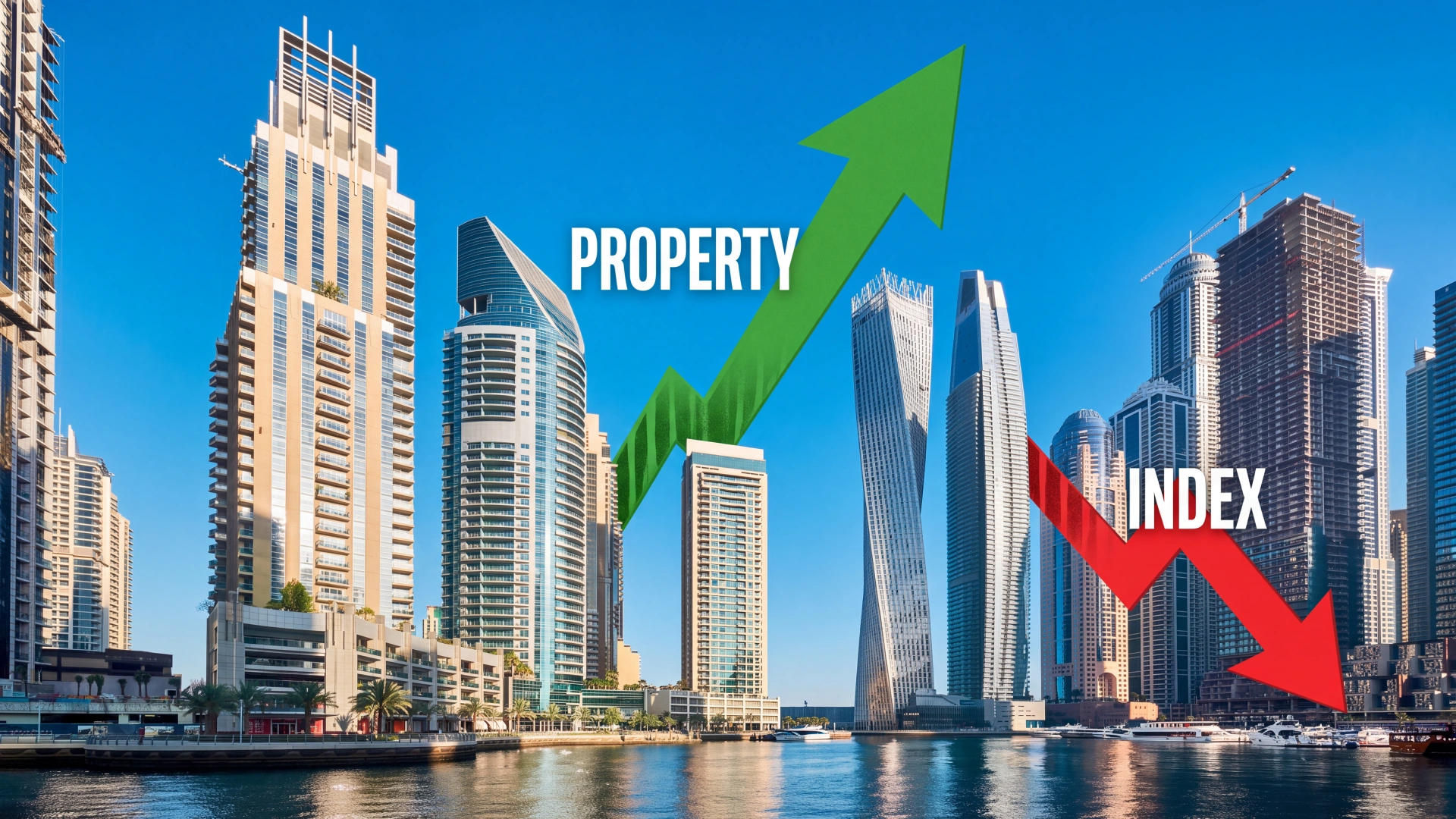
What Are Real Estate Market Indicators?
Real estate market indicators are data points used to evaluate the health, direction and underlying conditions of a property market.
In Dubai, these indicators can include:
No single indicator provides a complete picture. For example, rising property prices may appear positive, but if transaction volumes are falling and new supply is increasing, investors may need to examine the market more closely.
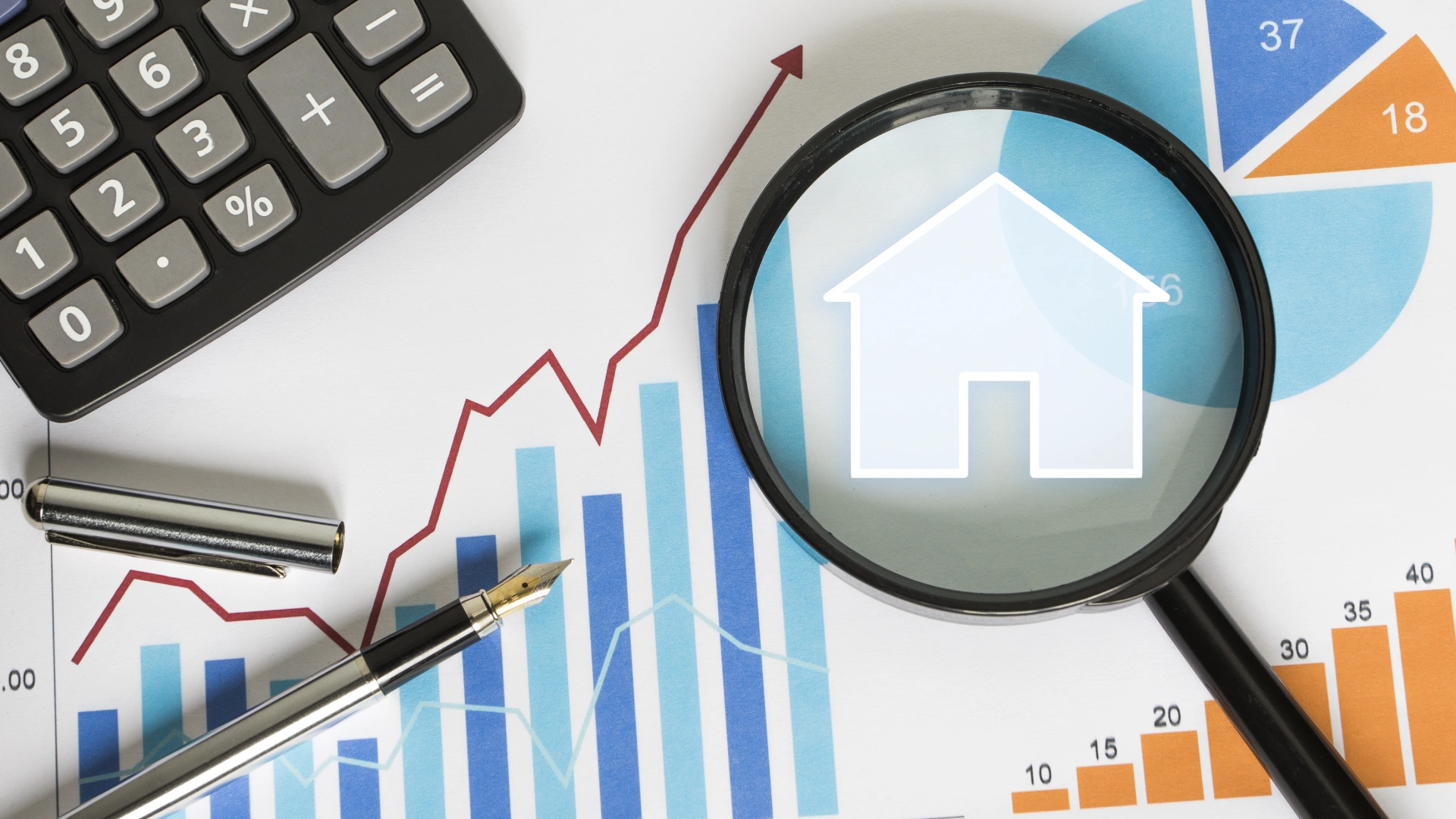
Market indicators help investors look beyond asking prices and individual listings, enabling them to identify broader trends, compare locations and property types, assess income potential, mitigate risks and make more informed investment decisions.
For example, an investor looking for rental income may focus on rental yields, occupancy and rental growth, while an investor targeting capital appreciation may pay closer attention to price trends, transaction activity, infrastructure investment and future supply.
Using several indicators together can provide a more balanced view of market conditions and reduce the risk of taking an investment decision based on a single data point.
Key Indicators Used to Understand Dubai’s Real Estate Market
The DFM Real Estate Index tracks the performance of listed real estate companies on the Dubai Financial Market. Unlike residential property price indices, it measures publicly traded companies rather than physical property prices.
The index can reflect expectations around company earnings, development activity, interest rates, investor sentiment and broader economic conditions.
As of 27 July 2026, the index stood at 11,403.74 points, with a market capitalisation of approximately AED 176.8 billion, representing 18.29% of DFM market capitalisation.
The index is a useful complementary indicator for Dubai property market analysis, particularly for understanding equity investor sentiment. However, it should not be used as a substitute for residential property price data.
The Dubai Property Price Index tracks changes in residential property values over time. The Dubai Land Department’s Residential Sales Price Index accounts for differences in property type, size and location, helping investors monitor price movements across apartments, villas and other property types.
Investors can use price index data to:
Dubai recorded 60,303 real estate transactions worth AED 252 billion in Q1 2026, with transaction value rising 31% year on year and transaction volume increasing 6%, according to the DLD. Comparing price index data with transaction activity gives investors a clearer view of Dubai’s property market.
Transaction volume shows how many properties are bought and sold during a specific period, while transaction value measures their total monetary worth. Together, they indicate market activity and investor participation.
According to the Dubai Land Department, Dubai recorded 60,303 real estate transactions worth AED 252 billion in Q1 2026. Transaction volume rose 6% year on year, while transaction value increased 31%. DLD also reported 57,744 real estate investments worth AED 173 billion, up 7% in volume and 22% in value year on year.
Transaction data is most useful when considered alongside property prices, rental performance and supply. Rising transaction activity and property values can indicate strong demand, while changes in volumes can highlight shifts in market activity.
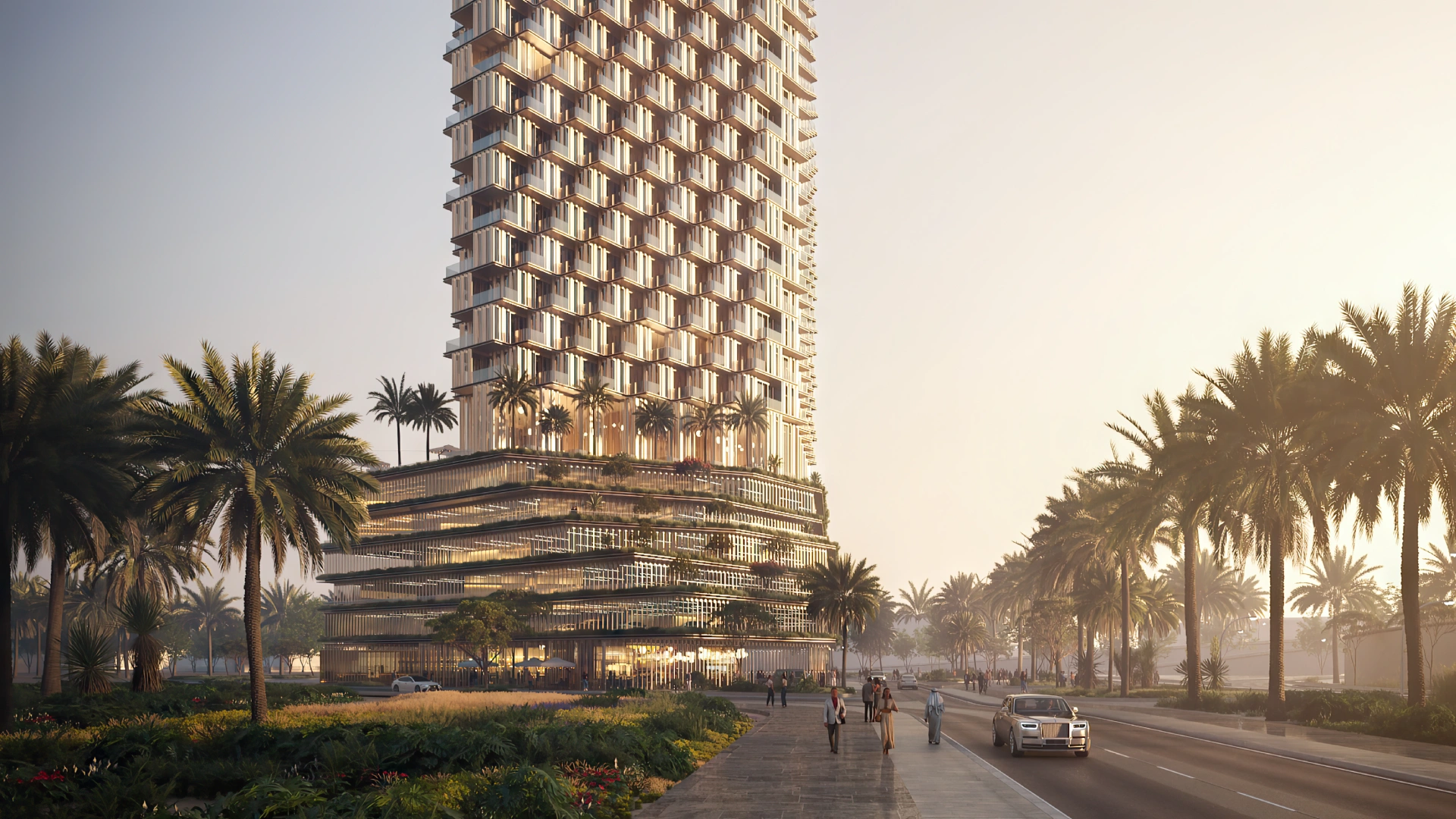
Rental indicators are important for investors seeking recurring income, as they provide insight into potential rental returns and tenant demand. Gross rental yield reflects rental income relative to the property purchase price, while net rental yield also accounts for costs such as service charges, maintenance, management fees and vacancy periods.
As of April 2026, Dubai’s average rental yield was 6.68%, with apartments averaging 7.15% and villas and townhouses 4.98%. Yields vary by location, property type and building. Investors should also monitor rental growth, tenancy contracts, renewals and occupancy to assess tenant demand and the sustainability of rental income.
Supply measures the amount of residential property entering or expected to enter the market. Tracking new developments can help investors understand the level of competition and how future supply may affect prices, rental demand and occupancy.
The Dubai Land Department provides official data on registered real estate projects and transactions, allowing investors to monitor development activity across Dubai. The impact of new supply can vary significantly between communities, depending on factors such as existing demand, property type, location and the availability of comparable properties.
Investors should therefore assess not only the number of units planned but also:
Supply is a market-wide indicator, but its impact is often highly localised. A large number of new units may have a different effect in a high-demand community than in an area where available properties already exceed demand.
Vacancy and occupancy rates help investors understand how effectively available residential stock is being absorbed. High occupancy can indicate strong tenant demand and support rental stability, while increasing vacancy can put pressure on rents and extend the time required to lease a property.
Occupancy should be assessed alongside rental levels. A property achieving a high rent but experiencing frequent vacancy may generate a lower annual return than a slightly lower-priced property with consistent occupancy. Investors should also consider building quality, location, amenities, access to transport and the availability of competing units when assessing vacancy risk.
Mortgage activity can provide insight into the role of financed buyers in the market. Interest rates influence borrowing costs and therefore affect affordability. When financing becomes more expensive, some buyers may reduce their budgets or postpone purchases. When borrowing costs decline, mortgage affordability can improve and support buyer activity.
Mortgage activity should be considered alongside transaction volumes because a market with strong cash-buyer participation may behave differently from one that relies more heavily on mortgage-financed purchases. For investors using leverage, the relationship between the mortgage rate and expected rental yield is particularly important. A high rental yield does not automatically translate into a strong investment return if financing and operating costs are also high.
Dubai's property market includes both off-plan and secondary market transactions, and understanding the difference can help investors assess potential opportunities and risks.
Off-plan properties are purchased before construction is completed and may offer structured payment plans and the potential for capital appreciation during the development period. Investors should consider the developer's track record, expected completion date, payment schedule and future supply in the area.
The secondary market consists of completed properties that are being resold. These properties allow investors to assess factors such as the property's condition, existing rental income, occupancy and recent comparable transactions.
Comparing off-plan and secondary market activity can give investors a broader view of buyer demand and market conditions. Investors should also consider their investment objective, time horizon and risk tolerance when deciding between the two.
Latest Dubai Real Estate Market Trends and Data
Dubai’s real estate market recorded strong activity in Q1 2026, according to data from the Dubai Land Department (DLD). The emirate recorded 60,303 real estate transactions worth AED 252 billion, with transaction volume increasing by 6% and transaction value rising by 31% compared with Q1 2025. Real estate investments reached AED 173 billion across 57,744 investments, while foreign investment reached AED 148.35 billion, an increase of 26% year on year.
The table below provides a snapshot of key indicators using data from official sources:
| Market Indicator | Latest Data | What It Shows |
|---|---|---|
| Transaction activity | 60,303 transactions worth AED 252 billion in Q1 2026 | Transaction volume increased 6% year on year, while transaction value increased 31%. |
| Property price trends | DLD Residential Sales Price Index | The index tracks residential property price movements across apartments and villas/townhouses and provides monthly, quarterly and annual data. |
| Rental market performance | DLD Residential Rental Performance Index and Smart Residential Rent Index | DLD provides official rental indicators that help track rental performance and market rental values. |
| Supply and demand | DLD real estate project and transaction data | Official DLD data can be used to monitor registered projects, transactions and activity across Dubai's property market. |
| DFM Real Estate Index | 11,403.74 points on 27 July 2026 | The index tracks the performance of listed real estate companies on the Dubai Financial Market. |
| Foreign investment | AED 148.35 billion in Q1 2026 | Foreign investment value increased 26% year on year, while the number of foreign investments increased 11% to 48,445. |
DLD's residential sales price index provides another important measure of market performance, with data available for apartments and villas/townhouses across monthly, quarterly and annual periods. For rental performance, DLD also provides dedicated rental indicators, including the Residential Rental Performance Index and the Smart Residential Rent Index. The Smart Residential Rent Index uses building classifications and factors such as location, building quality and services to determine rental values.
Taken together, these indicators provide investors with a broader view of Dubai's property market. Transaction activity can indicate the level of market participation, price indexes can show movements in property values, rental indicators can provide insight into the leasing market, and the DFM Real Estate Index can offer a separate view of listed real estate companies and equity-market performance.
How Investors Can Use Dubai Real Estate Indicators
Investors can use different indicators at different stages of the investment process.

Factors That Influence Dubai’s Real Estate Market Performance
Dubai's property market is influenced by a combination of economic, demographic, financial and infrastructure factors.
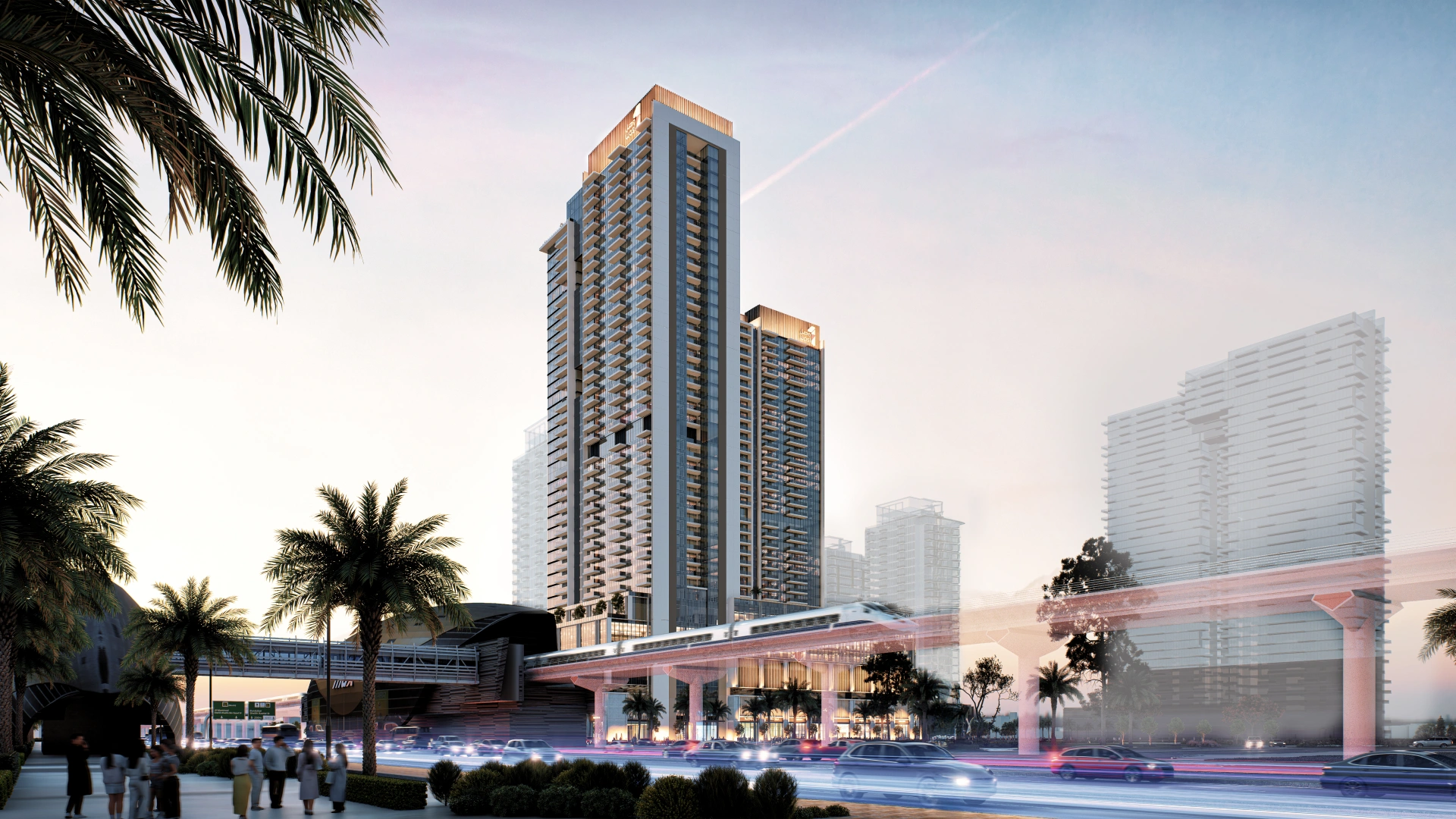
Infrastructure and Connectivity: Infrastructure can influence both the attractiveness and long-term accessibility of a location. Dubai continues to expand its transport network. The Dubai Metro Blue Line is scheduled to open in September 2029 and will connect areas including Dubai Creek Harbour, Ras Al Khor and International City.
The planned Gold Line will also connect several residential and economic districts, including Business Bay and Jumeirah Golf Estates, and is expected to serve more than 55 development projects. For investors, planned infrastructure should be assessed based on its expected impact on accessibility, demand and surrounding development rather than assuming that every infrastructure project will automatically translate into higher property values.

Fact Box
How to Use these Indicators to Make Better Decisions?
The most effective approach is to use indicators together rather than treating any single number as a buy or sell signal.
For example, an investor considering rental property could assess:
1. Purchase price
Compare the property's price per square foot with recent transactions for similar properties.
2. Rental income
Review current rental transactions rather than relying only on advertised asking rents.
3. Rental yield
Calculate gross yield and then estimate net yield after service charges, maintenance, management costs and vacancy.
4. Demand
Review transaction volumes, rental activity and occupancy levels in the community.
5. Future supply
Identify how many comparable properties are expected to enter the market and when.
6. Infrastructure and amenities
Assess connectivity, transport, schools, healthcare, retail and other facilities that influence resident demand.
7. Market cycle
Compare current price and transaction trends with previous periods to determine whether the market is accelerating, stabilising or correcting.
8. Investment objective
The indicators that matter most will depend on the strategy. A capital-growth investor may prioritise price appreciation and infrastructure, while an income-focused investor may place greater weight on rental yield, occupancy and rental demand. This approach allows investors to build a more complete picture of market conditions before committing capital.

Conclusion
The real estate index that Dubai investors monitor is only one part of a much broader market picture. Property price indexes can show how values are moving; transaction volumes can reveal the level of activity; rental yields can indicate potential income, while supply and occupancy data can help investors assess future market balance.
The DFM Real Estate Index adds another layer by showing how listed real estate companies are performing in Dubai's equity market. Because it measures listed securities rather than physical property prices, it should be viewed as a complementary indicator rather than a direct measure of residential property values.
Current Dubai real estate trends point towards a market that is becoming more measured after several years of strong growth. Transaction activity has moderated, while new supply is increasing and price and rental performance are becoming more differentiated between communities.
For investors, the key is therefore not to follow one index in isolation. Combining multiple Real Estate Market Indicators with property-level research, location analysis and an assessment of investment objectives can provide a stronger foundation for making informed decisions.
FAQs
What is the difference between the DFM Real Estate Index and the Dubai Property Price Index?
The DFM Real Estate Index tracks the performance of listed companies in the real estate sector on the Dubai Financial Market. The Dubai residential property price index tracks changes in the prices of physical residential properties.The two indicators measure different parts of the market. The DFM index reflects equity-market performance and investor sentiment towards listed companies, while a property price index provides insight into movements in residential property values.
Where can investors find Dubai real estate market data?
Investors can use official sources to access reliable Dubai real estate market data. The Dubai Land Department (DLD) provides information on property transactions, residential price indexes, rental indicators and other real estate market data. The Dubai Financial Market (DFM) provides information on listed real estate companies and the DFM Real Estate Index.For broader Dubai property market analysis, investors should compare relevant indicators across official sources and check the reporting period, definitions and methodology used for each dataset. This helps ensure that different figures are being compared on a like-for-like basis.
Can Dubai real estate indicators predict future property market trends?
Dubai real estate indicators can help identify market trends and potential direction, but they cannot reliably predict future performance. Factors such as interest rates, economic conditions, supply, investor sentiment and government policy can quickly change market conditions. Use indicators as decision-making inputs, not guarantees of future performance.
Which Dubai real estate indicators should first-time investors track?
First-time investors can start with six core indicators:
Property price trends to understand market values.
Transaction volumes to assess market activity and liquidity.
Rental yields to estimate potential income.
Rental and occupancy trends to assess tenant demand.
Upcoming supply to understand future competition.
Infrastructure and amenities to evaluate the long-term attractiveness of a location.
The DFM Real Estate Index can then be used as an additional indicator of listed-sector performance and investor sentiment.