


Image


In the UAE’s rental retail landscape, location is a decisive factor, not only in attracting footfall, but in sustaining it over time. Whether positioned within a transit-connected district, a tourism hotspot, or an emerging mixed-use community, where a retail space is placed often defines its commercial success. And as demand for prime retail space continues to outstrip supply, location has become less of a choice, and more of a strategy.
Table of Contents
What Is Retail Leasing in the UAE?
Retail leasing refers to the rental of commercial spaces intended for the sale of goods and services. In the UAE, particularly Dubai and Abu Dhabi, commercial leasing spans high-end malls, community centres, waterfront promenades and neighbourhood high streets.
Tenants typically enter into lease agreements with landlords or developers, locking in terms such as duration, rent, service charges and tenant fit-out obligations.
What makes the UAE unique is scale and pace. Population growth, record tourism, and continuous master-planned development mean retail locations can rise, or plateau, faster than in many global cities.
Did you know? In Q3 2025, retail transactions in Dubai surpassed AED 1 billion in a single quarter for the first time ever, highlighting strong demand for retail assets amid supply constraints.
Why Location Matters for Retail Properties
In this environment, leasing the right space often matters more than leasing any space. Here’s why:
Accessibility is often the first silent driver of footfall.
Retail spaces connected to metro stations, tram lines, pedestrian walkways, or major arterial roads naturally benefit from higher visibility and convenience. In Dubai, areas within walking distance of metro stations consistently outperform isolated locations, particularly for food, convenience retail, and service-based businesses.
The city’s long-term planning reinforces this trend. Under the Dubai 2040 Urban Master Plan, over half of residents are expected to live within close proximity to public transport, further concentrating activity around transit-oriented retail zones.
Retail follows gravity, meaning adjacent attractions, such as theme parks, entertainment venues, hotels and waterfronts, can dramatically increase foot traffic.
Major malls, business districts, tourism landmarks, and mixed-use destinations pull people in, and retail positioned nearby benefits from that momentum. Downtown Dubai, Dubai Marina, and Business Bay are not just popular because of what they offer, but because of how consistently people move through them.
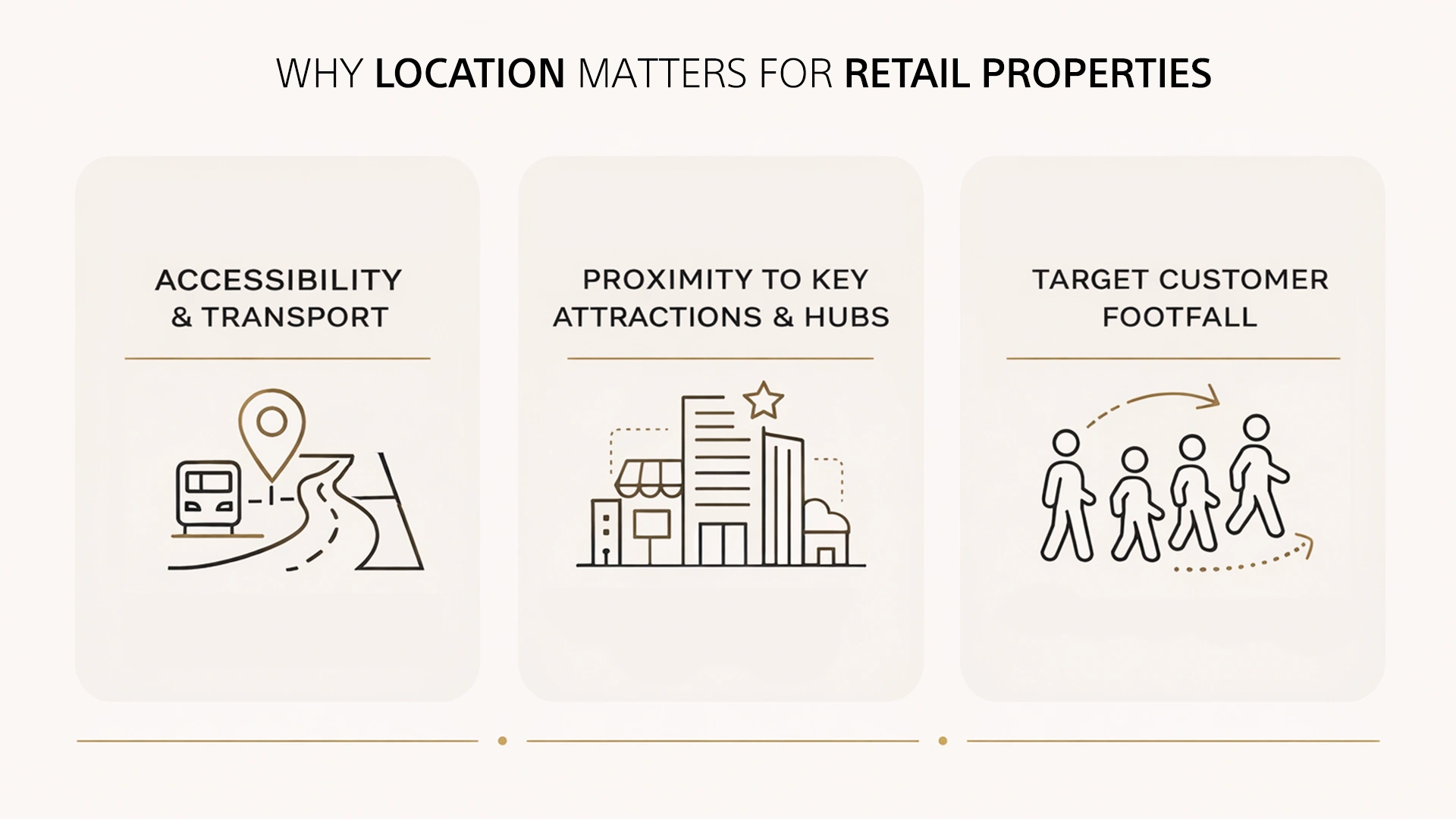
Not all footfall is created equal.
High numbers matter, but relevance matters more. A café inside a residential community depends on daily repeat visits. A luxury retailer near a tourist landmark depends on exposure and impulse. A convenience store near offices depends on timing and frequency.
Understanding who walks by, and why, is what separates a high-performing retail lease from an underperforming one.
Location also communicates brand value before a customer even steps inside.
A store in a premium district signals quality, credibility, and trust. For many brands, address alone influences perception, particularly in sectors such as fashion, wellness, dining, and lifestyle retail. In Dubai, where brand consciousness is high, the right location often does half the marketing work.
According to market reports from Cavendish Maxwell and Knight Frank, prime retail locations in Dubai can achieve up to 30% higher footfall than secondary areas, translating into rental premiums of 7–15% in key districts such as Downtown Dubai, Dubai Marina, and Business Bay.
Scarcity plays a role too. Limited availability of prime retail space has pushed many tenants to renew leases rather than relocate, reinforcing the value of established locations and pushing rents upward.
How Footfall Impacts Sales and Property Performance
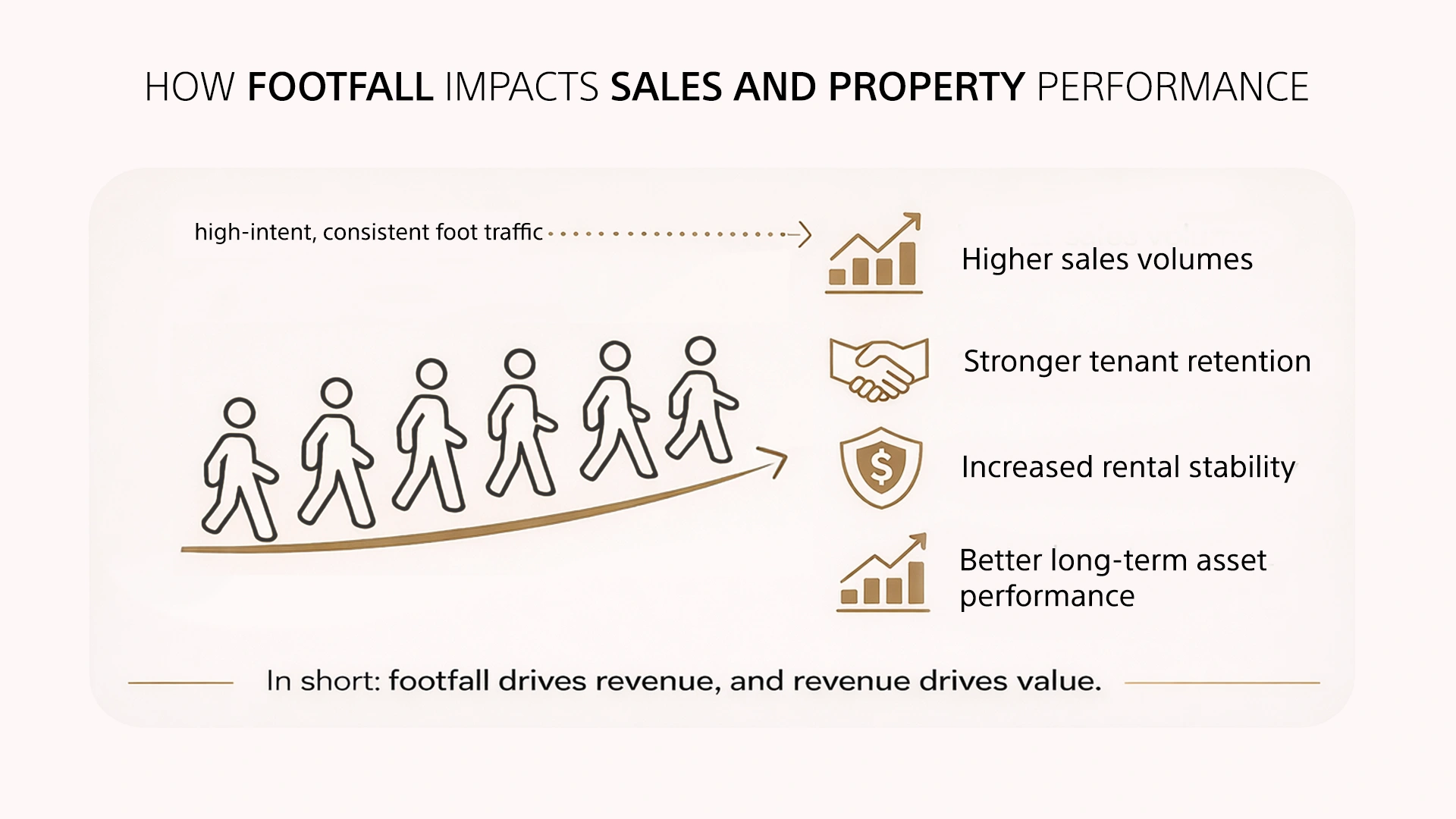
Footfall is a key performance indicator in retail leasing. Simply put, more visitors often mean more sales opportunities. But remember it’s not just raw numbers, the quality of footfall matters too.
Here’s what high-intent, consistent foot traffic typically supports:
In short: footfall drives revenue, and revenue drives value.
Types of Retail Properties in the UAE
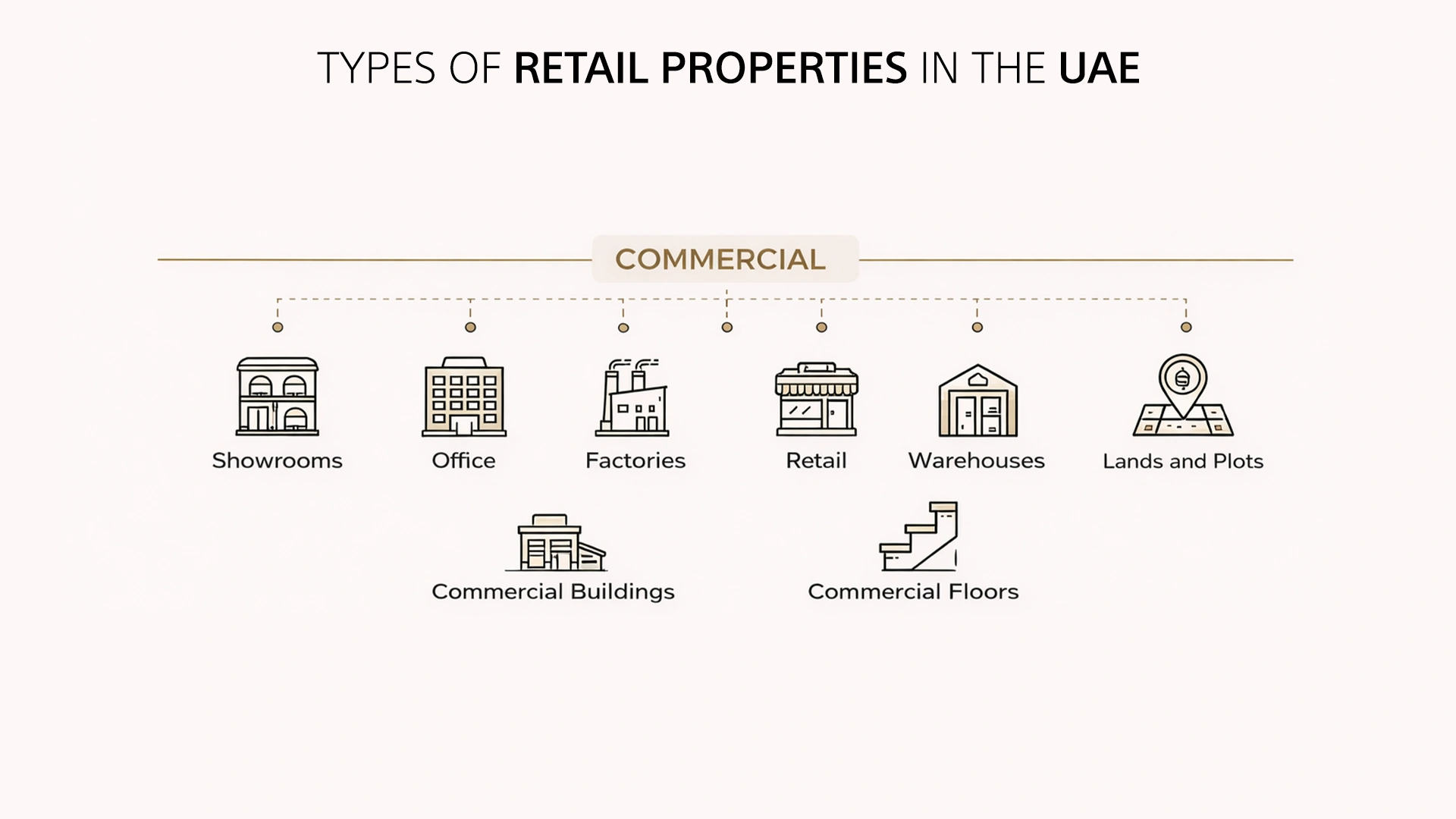
Retail properties in the UAE vary widely:
Pop-ups and Kiosks: Flexible short-term options appealing to startups and seasonal brands
Choosing the Right Retail Property for Long-Term Growth
The first question is simple: who is the customer?
Tourist-led retail thrives near landmarks and hotels. Community-based retail performs best within residential catchments. Office-driven retail depends on weekday density and convenience.
Aligning location with customer behaviour is non-negotiable.
Visibility, access, and ease of entry matter.
Retail units that are easy to reach — whether on foot, by car, or via public transport — outperform those that require effort to find. In a city built around mobility, convenience often wins.
Evaluate planned developments, infrastructure projects and population trends. Upcoming master-planned communities and mixed-use destinations can significantly elevate future demand and property values.
Did you know? Dubai South, Dubai Creek Harbour, and transit-linked corridors are already reshaping where retail demand will concentrate next.
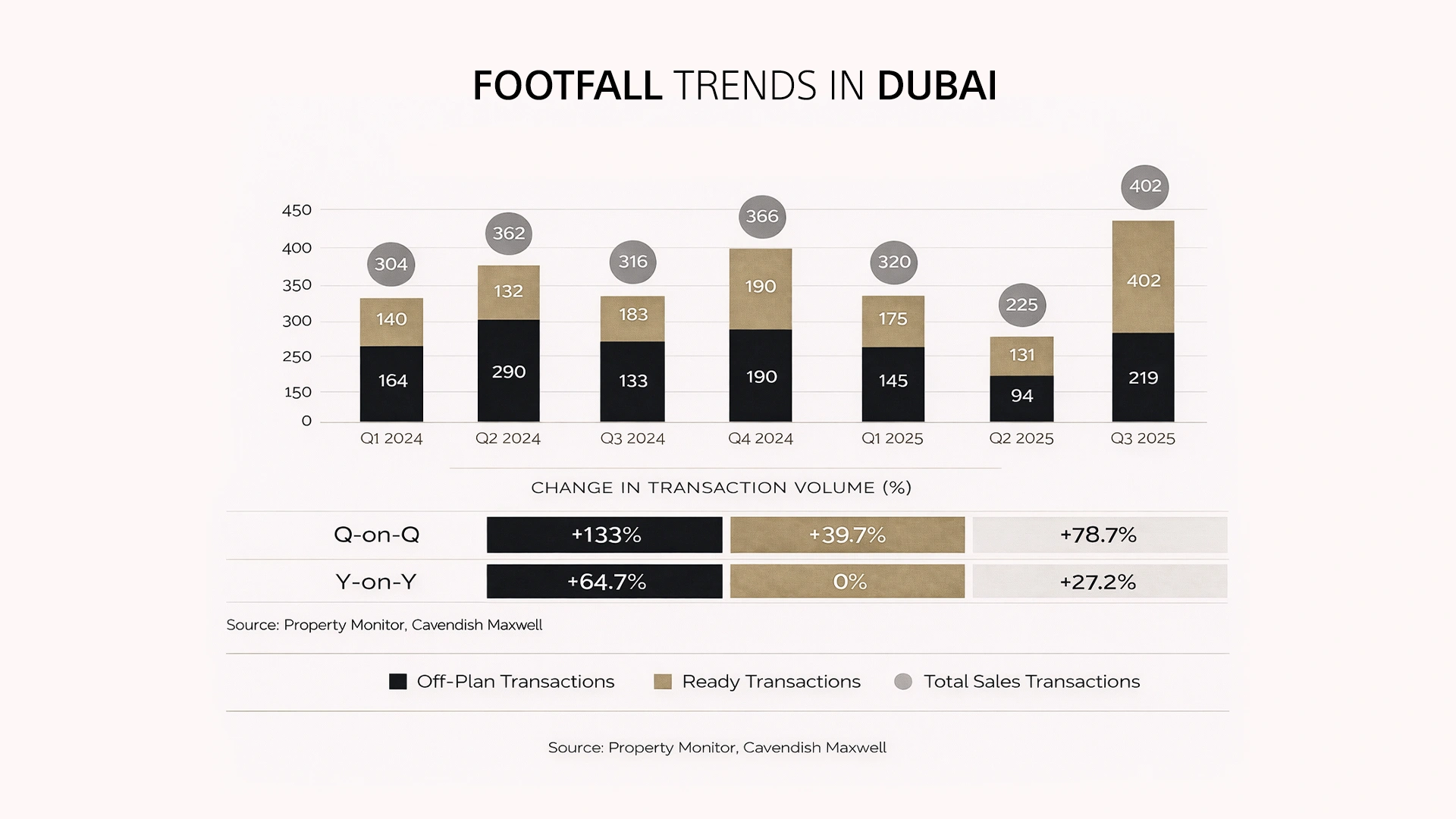
Footfall trends in Dubai
Prime locations in Dubai have seen retail rents rise by up to 15 % year-on-year, driven by limited supply and sustained foot traffic. Source: Cavendish Maxwell
Dubai Mall’s Fashion Avenue ranks as the 11th most expensive retail location worldwide with rents rising 9% year-on-year, reflecting its strategic retail value. Source: Cushman & Wakefield Core
Conclusion
In the UAE’s vibrant retail landscape, location isn’t just one factor among many, it’s the foundation of sustainable performance.
Whether you’re renting a shop in Dubai, a café, boutique, or global brand outlet, your choice of location will shape footfall, sales performance and long-term value.
Retail assets in well-connected, high-traffic areas outperform secondary locations in both visibility and investment potential. As Dubai’s retail ecosystem evolves with new communities and evolving consumer behaviour, a strategic location remains the most reliable driver of success.
FAQs
Iconic destinations like The Dubai Mall, Mall of the Emirates and waterfront retail hubs consistently draw the highest pedestrian traffic due to tourism and lifestyle appeal.
Consider your target audience, expected foot traffic, accessibility and future growth projections of the area.
Monitor urban development plans, infrastructure projects, and mixed-use community rollouts aligned with the Dubai 2040 Urban Master Plan, these often signal future retail demand.
Not always. High footfall is a strong indicator but must align with customer demographic fit and spending patterns to translate into revenue.
Yes, if they serve niche needs or local communities with limited competition, smaller spaces can perform well with the right tenant mix.
New communities, transport upgrades, and lifestyle assets increase foot traffic and demand for retail spaces, often boosting both rents and sales performance.