


Image


Ramadan has traditionally been perceived as a quieter period in Dubai’s real estate market. However, buyer activity observed over recent years points to a more nuanced shift in how the Dubai property market behaves during the holy month.
This case study examines buyer behaviour during Ramadan between 2023 and 2025, analysing transaction activity across property types, development stages, unit configurations and locations.
By reviewing historical transaction patterns, the study explores how buyer participation, asset preferences and geographic focus have evolved during Ramadan, and whether these changes reflect a broader repositioning of the holy month within Dubai’s annual real estate cycle.
Drawing on past trends, the analysis assesses the direction of market behaviour looking ahead and how Ramadan increasingly fits into the city’s real estate landscape.
Table of Contents
Introduction: Re-examining Ramadan in Dubai’s Real Estate Cycle
Ramadan plays a defining role in shaping daily life across the UAE, influencing working hours, consumption patterns and decision-making behaviour. In real estate, the holy month has long been associated with reduced activity, driven by assumptions around delayed viewings, slower negotiations and postponed financial commitments.
Yet Dubai’s property market has undergone structural changes that challenge these assumptions. The digitisation of property search, the expansion of off-plan development, flexible transaction processes and a more globally diversified buyer base have altered how and when purchasing decisions are made. Within this evolving environment, Ramadan has emerged as a distinct behavioural period rather than a uniform slowdown.
This case study explores whether Ramadan has shifted from a traditionally subdued phase into a recognised transaction window, using historical data to examine how buyers engage with the market during the holy month and what this reveals about longer-term behavioural trends.
Scope, Data Sources and Methodology
The analysis focuses on residential real estate transactions recorded during Ramadan across three consecutive years: 2023, 2024 and 2025. The study evaluates:
Disclaimer:
This case study is based on historical transaction data sourced from REIDIN – Data Analytics. The analysis reflects observed market behaviour during Ramadan and does not constitute property investment advice, financial recommendations or forward-looking guarantees.

Overview of Ramadan Transaction Activity (2023–2025)
Ramadan transaction values (AED) increased steadily over the three-year period. Total transaction value rose from AED 20.3 billion in 2023 to AED 33.4 billion in 2024, reaching AED 37.5 billion in 2025.
The most pronounced increase occurred between 2023 and 2024, while transaction values (AED) continued to rise in 2025 at a more measured pace.
This progression indicates that heightened Ramadan activity was not confined to a single year, but persisted across multiple cycles, suggesting a potential structural shift in transaction timing rather than a temporary surge.
Transaction numbers followed a similar pattern. The number of transactions recorded during Ramadan increased from 8,741 in 2023 to 12,946 in 2024, before rising further to 14,386 in 2025.
The parallel increase in transaction value and transaction count indicates that higher Ramadan activity was not driven solely by a concentration of high-value deals. Instead, broader participation across buyer segments contributed to the overall expansion, reinforcing the notion that Ramadan has become a period of active engagement rather than selective opportunity.
Buyer Participation Patterns During Ramadan
The data also indicates a transition from rapid expansion to stabilisation. While 2024 marked a notable acceleration in both value (AED) and numbers, 2025 did not reverse this momentum. Instead, activity levels remained elevated, suggesting that the market absorbed the earlier expansion and recalibrated at a higher baseline.
Nonetheless, the presence of sustained transaction numbers over multiple years supports the interpretation that buyer hesitation traditionally associated with Ramadan has diminished.
This stabilisation is often characteristic of maturing behavioural shifts, where an initial surge gives way to more consistent participation. In this context, Ramadan appears to have evolved into a recognised transaction window rather than an anomaly driven by temporary conditions.

Property Type Dynamics: Apartments vs Villas
Across all three years, apartments accounted for the majority of Ramadan transaction value, rising from AED 13.2 billion in 2023 to AED 20.9 billion in 2024 and reaching AED 22.6 billion in 2025. This sustained dominance highlights the structural role apartments play in Dubai’s residential market.
Apartments span a wide range of price points, locations and buyer profiles, making them more adaptable to shorter decision cycles and varied financial thresholds. Their consistent value contribution during Ramadan suggests that a large portion of buyers remain willing to transact on relatively standardized, well-understood assets during the holy month, rather than postponing decisions.
Villas and Townhouses, while contributing a smaller share of total transaction value, showed a pronounced increase over the same period, rising from AED 7.1 billion in 2023 to AED 12.5 billion in 2024 and AED 14.9 billion in 2025. Unlike apartments, villa purchases typically involve higher capital commitments, longer consideration periods and more lifestyle-driven decision-making. The sustained increase in villa transaction value (AED) during Ramadan indicates that buyers are increasingly comfortable finalising higher-stakes, long-term residential decisions during the holy month rather than deferring them.
Taken together, these dynamics suggest that Ramadan is no longer limited to lower-friction transactions. Instead, it accommodates both liquidity-driven apartment purchases and more deliberate, lifestyle-oriented villa acquisitions.
Transaction numbers further clarify this dynamic. Apartment transactions increased from 7,189 deals in 2023 to 10,826 in 2024 and 11,572 in 2025, maintaining their role as the market’s primary source of transactional momentum. This steady volume reinforces the interpretation of apartments as a liquidity anchor, enabling continuous market movement even during periods traditionally associated with reduced activity.
Villa and Townhouse transactions, while lower in absolute numbers, rose from 1,552 in 2023 to 2,120 in 2024 and 2,814 in 2025. The rising number of villa transactions during Ramadan is particularly significant given the typically longer decision timelines associated with this property type. Rather than indicating opportunistic behaviour, this pattern points to intentional, planning-led purchases that align with household needs and longer-term residential goals.
Development Status Analysis: Off-Plan vs Ready Transactions
Off-plan transactions represented a substantial portion of Ramadan transaction value (AED). Off-plan sales increased from AED 10.9 billion in 2023 to AED 22.4 billion in 2024 and AED 25.4 billion in 2025.
This sustained off-plan activity reflects alignment between developer launch schedules, flexible payment structures, and buyer planning horizons. Ramadan increasingly coincides with new project announcements and phased releases, contributing to consistent off-plan engagement.
Ready-property transactions also remained active, rising from AED 9.4 billion in 2023 to AED 10.9 billion in 2024 and AED 12.1 billion in 2025. The steady presence of ready-market activity indicates that end-users seeking immediate occupancy continue to transact during Ramadan rather than deferring decisions.
Together, these dynamics highlight Ramadan’s capacity to support multiple buyer objectives simultaneously.
Unit Configuration Preferences and Household Decision-Making
Across the three-year period, transaction value (AED) concentrated around practical residential configurations. Two-bedroom apartments consistently dominated apartment transaction value, while four-bedroom villas led villa transactions.
This pattern suggests that Ramadan transactions are often aligned with household planning and long-term residential needs rather than speculative driven purchases. The dominance of mid-family configurations reinforces the interpretation of Ramadan as a period associated with considered, lifestyle-driven decision-making.
Geographic Shifts in Ramadan Transactions
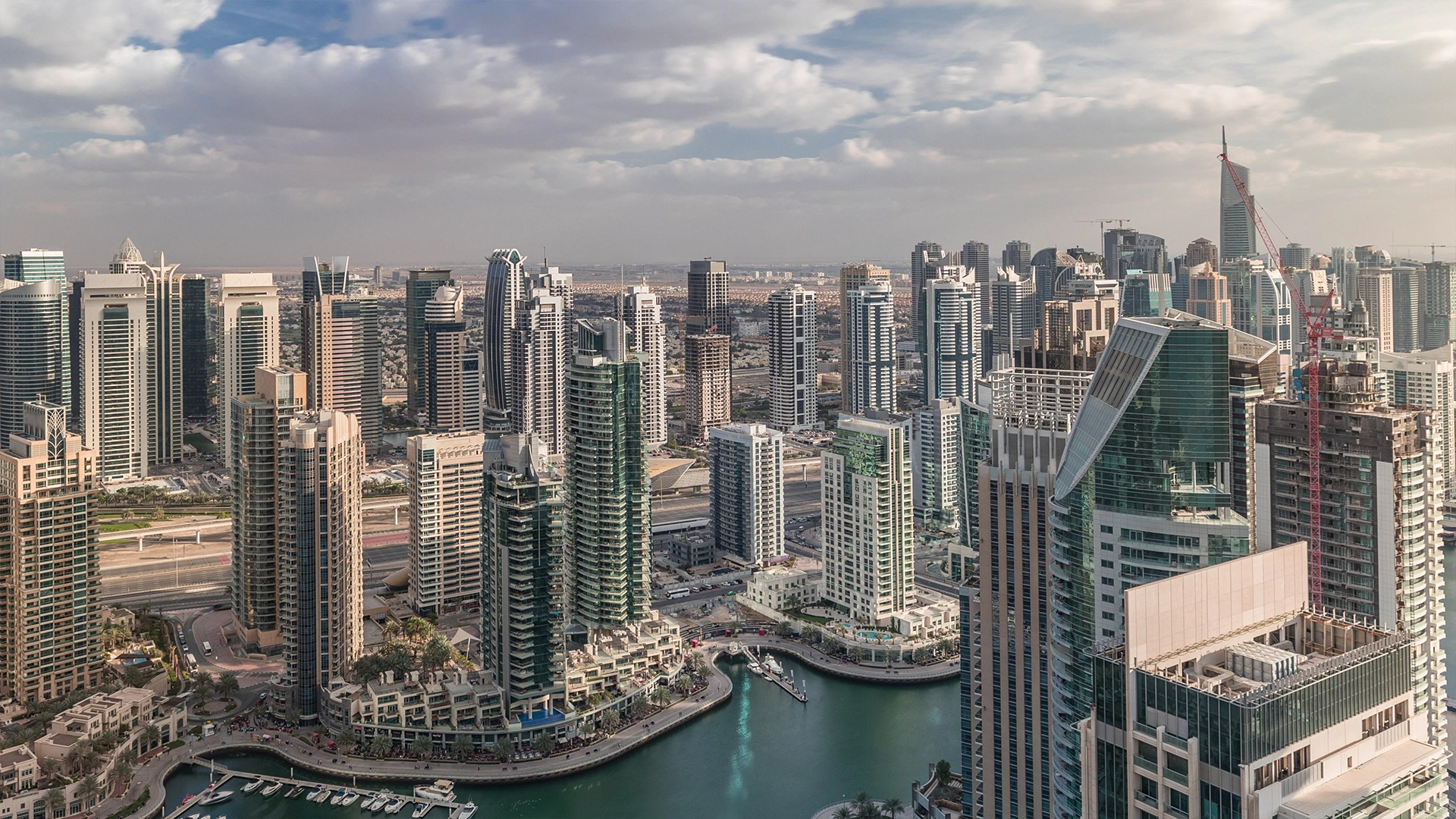
The geographic distribution of Ramadan transaction value (AED) shifted noticeably between 2023 and 2025.
Behavioural Signals Observed During Ramadan
Several behavioural patterns emerge consistently from the data:
Collectively, these signals indicate that Ramadan has become embedded within buyer decision cycles, rather than functioning as a peripheral or disruptive period.

Directional Outlook Based on Historical Patterns
While this case study does not offer forecasts or predictions, the consistency of participation observed between 2023 and 2025 suggests that Ramadan is likely to remain an active transaction period if current behavioural patterns persist.
Continued engagement across property types, locations and buyer profiles indicates that the holy month has been structurally repositioned within Dubai’s real estate cycle.
Conclusion
The data reviewed in this case study indicates that Ramadan has evolved from a traditionally quieter phase into a period of sustained real estate activity in Dubai. Rising transaction values (AED), expanding participation, diversified asset preferences and shifting geographic focus collectively point to a structural change in buyer behaviour.
By examining historical trends rather than offering guidance, this analysis highlights how Ramadan has become a recognised and integrated component of Dubai’s real estate transaction cycle, one shaped by planning, participation and long-term residential decision-making.

FAQs
Historical transaction data suggests that Ramadan activity has increased over recent years, challenging the perception of the holy month as a uniformly slow period.
Buyers appear to maintain engagement during Ramadan, with transaction patterns reflecting planning-led and lifestyle-oriented decisions.
Both apartments and villas record sustained activity, with apartments sustaining transaction flow during the holy month.
Off-plan activity remains strong during Ramadan, reflecting alignment between developer launches and buyer planning cycles.