


Image


Dubai’s real estate market in 2026 continues to attract global attention, but many buyers are still asking the same question: is it a good time to buy a house or should they wait for prices to soften?
The hesitation is understandable. After several strong growth cycles, evolving interest rate conditions, and continuous new project launches, many investors and end-users are questioning whether they should wait for a better entry point.
However, current market indicators suggest that Dubai is not in a speculative peak but in a structurally supported growth phase driven by population expansion, infrastructure investment, and sustained rental demand.
This guide explores whether is now a good time to buy a house, why buyers are hesitating, and why many investors still see 2026 as a strong long-term entry point.
Table of Contents
Why many buyers are waiting in 2026
Buyers in 2026 are taking a more cautious approach as they assess ongoing market conditions in Dubai. Many are monitoring price movements, interest rates, and new project launches before committing, while others are waiting for potential adjustments in pricing or more attractive payment plans. At the same time, some buyers are delaying decisions in anticipation of greater clarity in supply pipelines and broader economic trends.
One of the biggest reasons buyers are hesitating in 2026 is the perception that Dubai property prices have already risen too far, too quickly. Prime communities such as Dubai Marina, Downtown Dubai, Palm Jumeirah, and Dubai Hills Estate have experienced notable price growth over the past few years, leading some investors to question whether they are entering the market too late. For many first-time buyers, especially, there is concern that current prices may represent the top of the cycle and that a correction could eventually follow.
This uncertainty has encouraged some buyers to delay purchasing decisions in the hope that prices may soften, or that better opportunities could emerge later. Others are comparing today’s prices with pre-2020 market conditions and assuming the market may eventually return to those levels.
However, the current market cycle differs significantly from previous speculative periods. Much of the recent growth has been supported by genuine end-user demand, long-term residency growth, and increased international investment rather than short-term speculative flipping. Dubai’s growing population, strong economic performance, and continued infrastructure investment are all contributing to sustained housing demand across both the primary and secondary markets.
In addition, supply in many established communities remains relatively limited compared to demand, particularly for high-quality villas, waterfront properties, and family-orientated developments. This reduces the likelihood of major price declines in prime areas and points toward a more stable long-term market structure rather than a short-term boom cycle.

Another major factor causing hesitation among buyers in 2026 is uncertainty surrounding global interest rates and mortgage costs. Over the past few years, rising borrowing costs have affected affordability in many international property markets.
For buyers relying on financing, higher interest rates can increase monthly repayments and reduce overall purchasing power. This has caused some potential homeowners and investors to reconsider their budgets, delay upgrades to larger properties, or postpone purchases altogether while waiting for favourable lending conditions. Many buyers are also monitoring expectations around possible future rate cuts before committing to long-term mortgage agreements.
At the same time, Dubai’s real estate market operates differently from many global markets because it is not solely dependent on mortgage-driven demand. A significant portion of transactions continue to come from cash buyers, international investors, and high-net-worth individuals purchasing with substantial equity. This creates additional resilience within the market and helps reduce the impact of financing fluctuations on overall transaction activity.
Additionally, strong rental demand across Dubai continues to support investor confidence. Many investors view higher financing costs as manageable when balanced against the city’s strong rental yields and long-term capital appreciation potential. As a result, while interest rate uncertainty has slowed some purchasing decisions, it has not significantly weakened the broader market outlook.

Another reason many buyers are delaying purchases is the expectation that developers may introduce larger discounts, flexible payment plans, or additional incentives as more projects launch across Dubai. With new supply continuing to enter the market in 2026, some investors believe waiting could provide opportunities to secure lower prices or better deals in the future.
This mindset is especially common among buyers who closely follow previous market cycles, where softer demand occasionally led to promotional offers, fee waivers, or post-handover payment plans. As a result, some purchasers are adopting a “wait and see” approach, hoping that competition among developers may create more favorable conditions later.
However, while incentives do exist in selected projects, significant price reductions are far less common in well-performing and high-demand communities. Established areas such as Dubai Hills Estate, Palm Jumeirah, Downtown Dubai, and waterfront developments continue to experience strong absorption rates driven by both local and international demand. Properties in these locations often maintain pricing strength because supply remains relatively limited compared to buyer interest.
In addition, developers today are generally taking a more measured approach to project releases and construction timelines compared to previous market cycles. This helps reduce the risk of oversupply and supports overall market stability. Many developers are prioritizing value-added incentives such as extended payment plans, service charge waivers, or furnishing packages rather than lowering headline prices significantly.
For long-term investors, waiting purely for discounts may not always produce better value. In many cases, gradual price appreciation, rising construction costs, and increasing land values can offset any future promotional savings.
Why buying earlier could be a smarter investment
For investors asking when is a good time to buy a house, historical data suggests earlier entry often leads to stronger long-term returns.
Construction costs in the UAE continue to rise due to global inflation, strong labour demand, and the scale of ongoing mega-projects across Dubai. At the same time, higher standards in design, sustainability, and smart-home integration are increasing the overall cost of delivering new developments.
As a result, future project pricing is unlikely to decrease significantly. Developers are more likely to pass on higher input costs through gradual price increases rather than offer lower entry points. This means that waiting on the sidelines may lead to higher acquisition costs for similar property types in the future.
For investors considering if it is a good time to buy a house, this creates a clear advantage for earlier entry. Buying today can secure more competitive pricing, better unit availability, and stronger long-term capital appreciation potential as construction costs and land values continue to rise across Dubai’s property market.
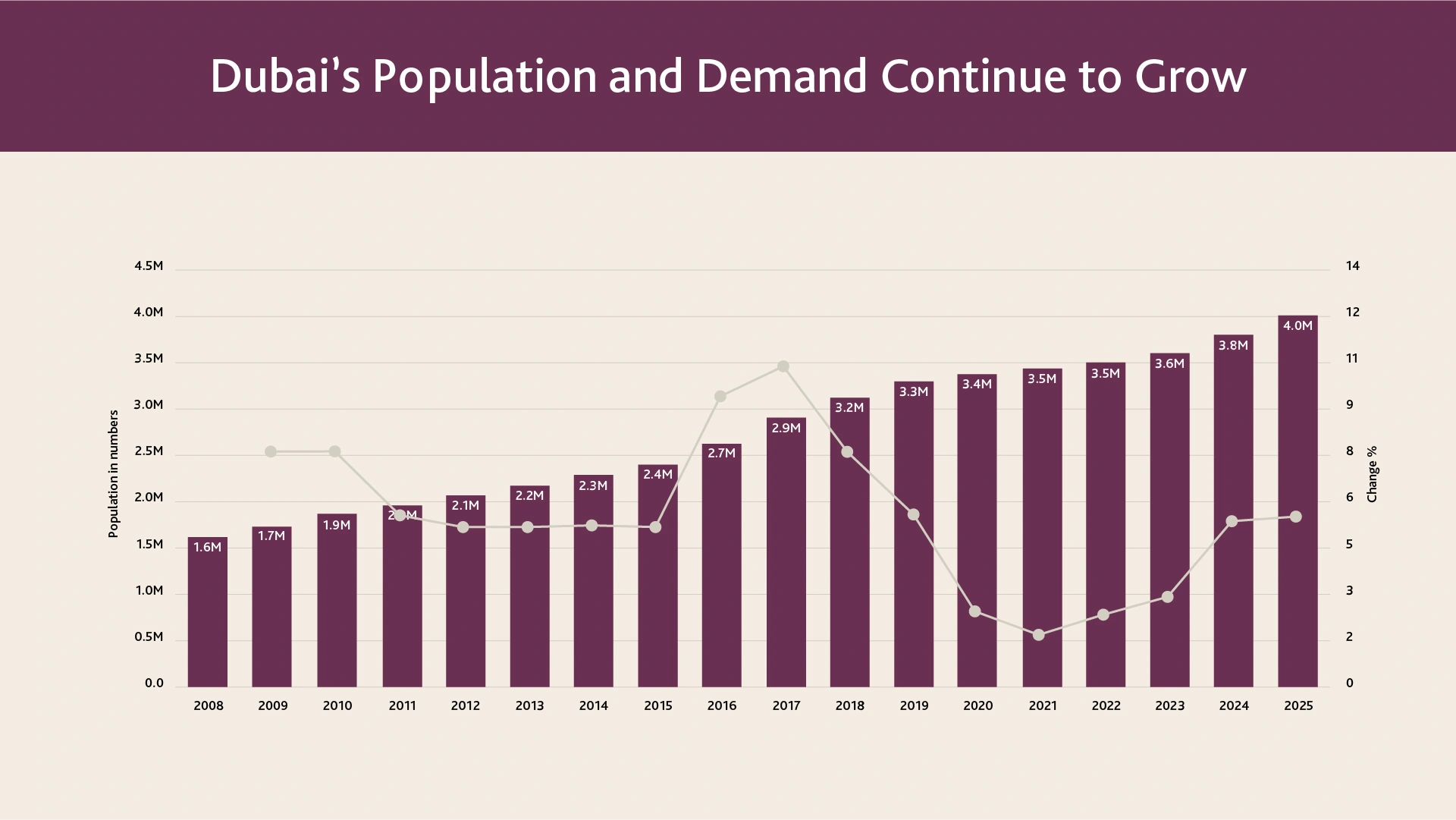
Dubai’s population continues to grow steadily, supported by expatriate inflows, business migration, and long-term residency programmes that encourage professionals and families to settle in the city. This sustained growth directly increases demand for both rental and owner-occupied housing across key and emerging communities.
At the same time, ongoing infrastructure projects such as metro expansions, new road networks, and emerging residential corridors are opening up new areas for development. This is expanding housing demand beyond traditional prime locations and strengthening long-term property fundamentals.
For buyers asking “Is it a good time to buy a house?” This combination of rising population and improving connectivity signals continued demand pressure, which supports long-term price stability and capital appreciation in Dubai’s real estate market.
One of the strongest reasons investors enter the market is the consistent performance of ROI in Dubai real estate.
Typical gross rental yields in 2026 include:
Compared to global cities, Dubai continues to offer stronger net returns due to no annual property tax and high rental occupancy rates.
Dubai real estate market outlook for 2026
Understanding whether this is a good time to buy a house requires a closer look at broader market dynamics.
The market is increasingly driven by end-user demand rather than speculative flipping, reflecting a shift toward more stable, long-term growth. Buyers are focusing more on lifestyle, community quality, and overall liveability, including access to schools, amenities, and well-planned neighbourhoods.
Villas and townhouses continue to outperform apartments in demand growth, supported by changing lifestyle preferences, more remote and hybrid working patterns, and a stronger focus on space and privacy. This has led to higher occupancy and stronger price resilience in villa communities compared to many apartment-heavy areas.
Developers are increasingly phasing projects strategically to avoid oversupply. New developments are concentrated in master-planned communities aligned with infrastructure expansion. This approach helps balance supply with actual end-user demand rather than speculative build-up.
This controlled supply supports price stability across key areas and reduces the risk of sudden market corrections, reinforcing long-term investor confidence.
Dubai continues to attract international investors due to:
Institutional participation is also increasing, adding long-term market depth.
Dubai’s long-term outlook remains strong, supported by:
These factors reinforce sustained housing demand.
Beyond traditional drivers, 2026 is also shaped by a shift in buyer behaviour. End-users are becoming more selective, focusing on energy efficiency, smart home integration, and community design rather than just location alone. Developers are responding with smarter, more sustainable communities aligned with Dubai’s wider urban development vision.
At the same time, secondary market activity is increasing, showing that liquidity is healthy, and investors are actively rotating assets rather than exiting the market. This is typically a sign of a maturing market rather than a declining one. For long-term investors, this environment often creates more predictable pricing and stable rental income performance over time.
So when is a good time to buy a house?
The question 'When is a good time to buy a house?' rarely has a perfect timing answer.
In real estate, the most successful investors typically focus on:
Current market conditions suggest 2026 remains within a growth-supported phase rather than a peak correction cycle.

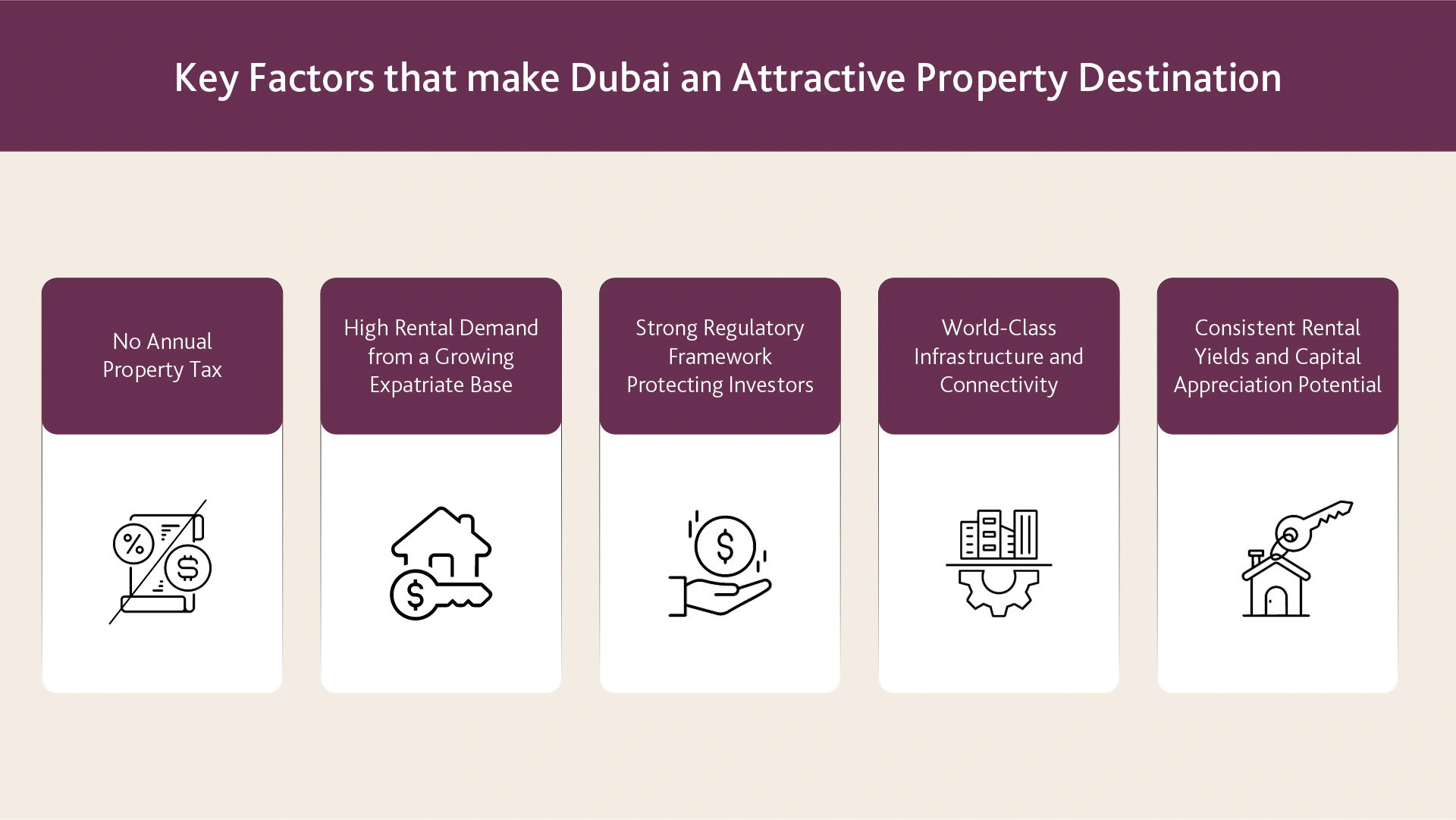
Why Dubai remains attractive for property buyers
Dubai continues to stand out globally due to:
These factors support both income generation and long-term capital growth.
Fact Box
Ready to invest in Dubai? Explore Wasl's apartments, villas and townhouses for sale and find the right property for you.
Key Insight
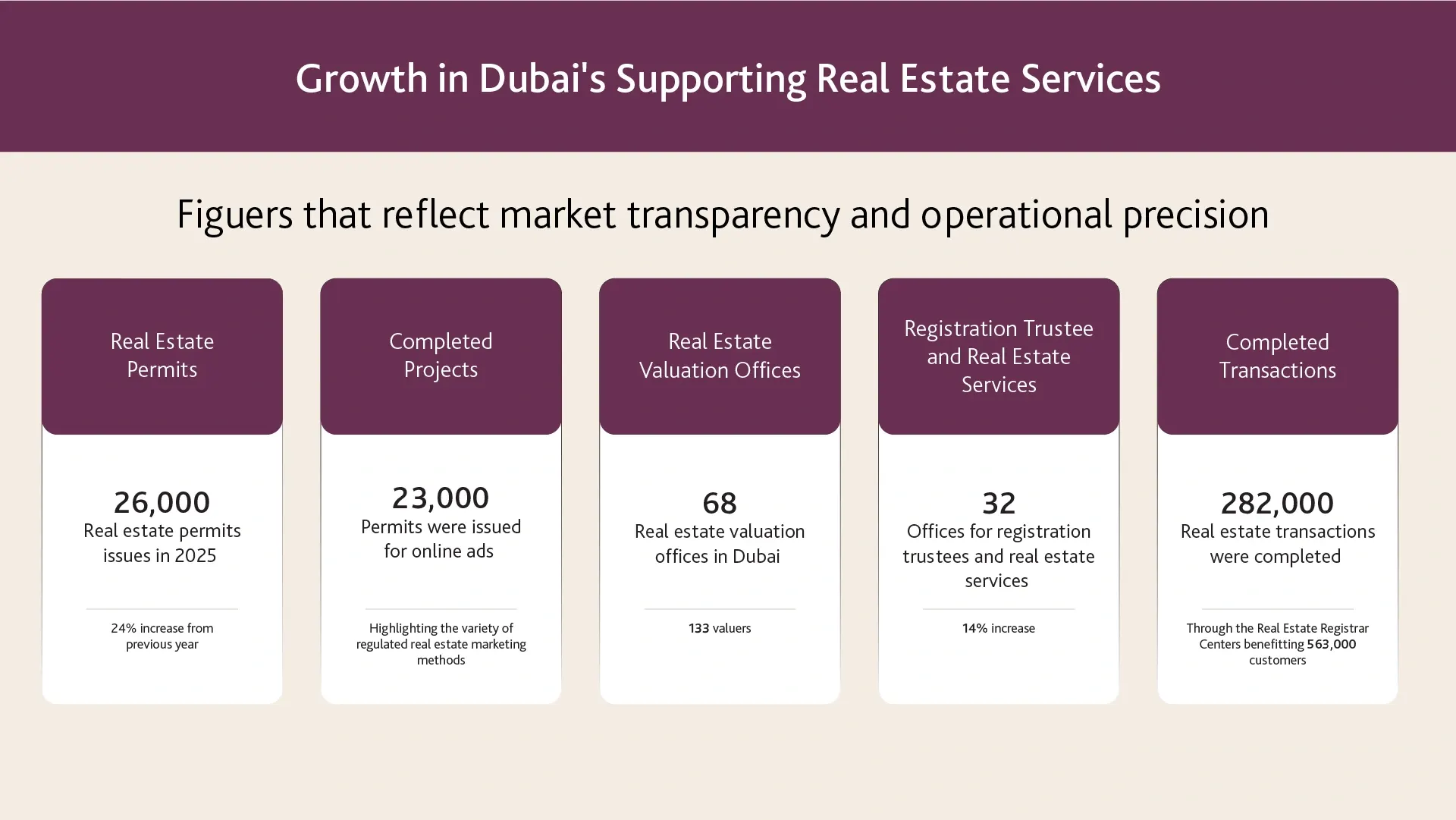
Dubai continues to experience sustained infrastructure investment, strong population inflow, and diversified economic growth, all of which support long-term real estate stability and strong ROI in Dubai real estate.
FAQs
Yes, 2026 remains a favourable time for long-term buyers. Market fundamentals such as population growth, infrastructure expansion, and strong rental demand continue to support property values. While short-term fluctuations exist, Dubai still offers strong ROI compared to many global cities.
The 70% rule is a guideline used in property flipping strategies. It suggests investors should not pay more than 70% of a property’s expected resale value after renovation costs are deducted. This helps ensure profitability while managing risk in competitive and fast-moving markets like Dubai.
Dubai does not have a fixed cheapest month, but transaction volumes often slow during summer, especially July and August. During these periods, sellers or developers may offer more flexible terms. However, pricing trends are mainly driven by demand cycles rather than seasonal patterns.
For long-term investors, investing now may be more advantageous than waiting. Construction costs are rising, demand is increasing, and supply in prime areas is becoming more limited. Delaying entry could result in higher purchase prices, especially in high-demand master-planned communities such as Jumeirah Golf Estates and established destinations like Downtown Dubai, where developments such as One B Tower continue to attract investor interest.
Average rental yields in Dubai typically range from 5% to 10%, depending on location and property type. Prime areas offer stable returns, while emerging communities may deliver higher yields. Combined with zero property tax, this makes Dubai one of the strongest global rental markets.
Key investment areas include Dubai Hills Estate, Business Bay, Dubai Marina, and Jumeirah Village Circle. Emerging communities connected to new infrastructure projects also show strong growth potential, offering a balance of rental income stability and long-term capital appreciation.